If you are planning a commercial build-out or renovation in Chattanooga, you may have asked yourself a practical question:
Can we save money by managing the project ourselves?
For a small cosmetic update, the answer may sometimes be yes. But for most commercial construction projects, self-managing is not simply a matter of hiring a few trades and keeping an eye on the schedule. You are taking responsibility for permits, code compliance, budgeting, safety, subcontractor coordination, inspections, warranties, and every problem that appears along the way.
That is a lot to carry: especially when you are also running a business, nonprofit, church, school, or community organization.
The honest answer is this: A general contractor is not just another project expense. A good GC is the person responsible for protecting the entire project.
First, Understand the Rules in Tennessee
Before comparing the cost of a Chattanooga contractor, it is important to understand the licensing requirements.
According to the Tennessee Board for Licensing Contractors, a contractor’s license is generally required when the total cost of a construction project reaches $25,000 or more. The total includes labor, materials, and other project costs.
The owner-builder exemption commonly associated with residential construction does not provide a broad exception for commercial projects or buildings open to the public. That includes many churches, nonprofit facilities, offices, retail spaces, schools, and medical facilities.
The City of Chattanooga’s commercial building permit guidance also requires the appropriate contractor and permit information before work can proceed.
In other words, self-managing a commercial project may mean more than acting as your own coordinator. You may need to meet licensing requirements yourself while taking on all the responsibilities of a licensed general contractor.
What Does a General Contractor Actually Do?
A general contractor is not simply the company that sends workers to a job site. The GC builds the system that allows the project to move forward safely, legally, and efficiently.
Permitting and Code Compliance
Commercial construction involves more than selecting finishes and opening walls. Depending on the project, your team may need to address:
- Building permits and inspections
- Fire and life-safety requirements
- Accessibility and ADA compliance
- Electrical, plumbing, and mechanical permits
- Occupancy changes
- Structural conditions
- Zoning and site requirements
- Final approvals and close-out documentation
A missed requirement can lead to failed inspections, redesign, delays, or expensive work that must be removed and rebuilt.
At Robert Roberts LLC, we bring the contractor into the process early. Our commercial contractor services include constructibility reviews, project budgeting, scheduling, long-lead material planning, subcontractor prequalification, and coordination from conception to completion.
Scheduling and Subcontractor Coordination
A commercial project is a sequence. Framing must be ready before drywall. Rough-ins must be completed before walls are closed. Equipment must arrive before installation can begin. Inspections must happen at the right time.
If one trade falls behind, the impact can spread across the entire project.
A GC coordinates architects, engineers, suppliers, inspectors, and subcontractors so the work proceeds in the right order. That coordination becomes even more important when construction takes place in an occupied building.
For example, the Hixson Presbyterian classroom addition required construction to be coordinated around the congregation’s scheduled activities. According to Doug Jones, the project team minimized interruptions and restored the existing facility carefully when utilities had to be connected.
That type of coordination does not happen by accident. It takes planning, communication, and daily oversight.

Cost Management and Transparent Budgeting
Many owners consider self-management because they want to avoid a GC fee. That is understandable. Every dollar matters, particularly for a small business, church, or nonprofit.
But the cost of a general contractor is visible. The cost of not having one is often hidden.
Without centralized cost management, owners may encounter:
- Incomplete scopes of work
- Conflicting subcontractor bids
- Unclear allowances
- Unapproved work
- Material substitutions
- Change orders
- Duplicate labor or mobilization costs
- Missed tax or purchasing opportunities
- Delays that create additional rent or lost revenue
A professional GC should give you a clear budget, explain what is included, document changes, and identify cost concerns before they become emergencies.
At Hixson Presbyterian, the project experienced some scope growth but finished less than 2% over the original contract cost. The church also saved more than $50,000 through the process used to receive its sales tax exemption.
As Doug Jones said, “The performance of your organization delivered a facility with high quality, while finishing the project on schedule with attention to budget.”
That is what effective budgeting looks like: not pretending changes will never happen, but managing them responsibly.
Quality Control, Safety, and Insurance
When you hire individual trades directly, you also become responsible for verifying licenses, insurance, work quality, site safety, and payment documentation.
You may need to confirm:
- Whether subcontractors carry appropriate liability coverage
- Whether workers’ compensation requirements are met
- Who is responsible for site safety
- Who handles damaged materials or property
- Whether work meets plans and specifications
- Whether subcontractors provide lien waivers
- How warranty requests will be handled after completion
A GC creates one point of responsibility. That does not eliminate every risk, but it gives the owner a qualified professional who is actively managing those risks.
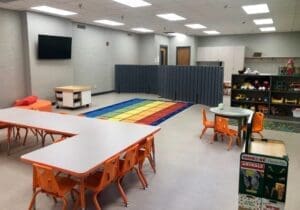
Quality control also protects the long-term value of the building. At Abba’s House, Robert Roberts completed a 7,000-square-foot EPIC Preschool remodel that included expanded classrooms and restrooms, new finishes, LED lighting, millwork, plumbing fixtures, and an indoor playground.
Melissa Tiffin described the company as “a highly professional and trustworthy company” with “responsive, courteous and hardworking” craftsmen.
The Hidden Risks of Going Without a GC
The most common mistake is looking only at the initial bid instead of the total cost of the project.
A lower starting price can be erased by a single major issue:
- A change order caused by an incomplete scope
- A delay caused by a long-lead item
- Rework after a failed inspection
- Damage caused by poor sequencing
- A subcontractor dispute
- A mechanics’ lien from an unpaid supplier
- Lost revenue from a late opening
- Temporary relocation or extended rent
- Repairs required after turnover
Commercial renovations are especially unpredictable because existing buildings often contain concealed conditions. Robert Roberts’ CADAS first-floor detox renovation is a clear example. The team gutted approximately 11,000 square feet in a structure more than 70 years old, discovered multiple additions during demolition, installed a new structural frame and foundation, and worked while the second floor remained occupied.
That kind of project requires experienced coordination between the owner, architect, structural engineer, inspectors, and subcontractors. It cannot be managed effectively by simply reacting to problems as they appear.

When Can Self-Managing Make Sense?
Self-managing may be reasonable when the work is genuinely small, cosmetic, and low-risk.
Examples might include:
- Interior painting
- Replacing carpet or flooring
- Installing non-structural shelving
- Updating light fixtures through a qualified electrician
- Minor finish repairs
- Furniture or equipment installation
Even then, confirm whether permits or licensed trades are required.
Self-management becomes much less practical when the project includes structural work, new walls, HVAC, plumbing, electrical systems, accessibility improvements, fire protection, occupancy changes, extensive demolition, or multiple subcontractors.
A useful rule is this:
If a mistake could stop your business from opening, interrupt your mission, or affect public safety, involve a qualified general contractor.
Why Chattanooga Organizations Choose Robert Roberts
Our work has taken us from the CADAS Sober Living Apartments to Abba’s House, Hixson Presbyterian Church, Ivy Academy, Weed Man, and many other commercial, nonprofit, educational, and community facilities.
At Ivy Academy’s Skillern Elementary campus, we helped create a new learning environment with classrooms, offices, restrooms, durable finishes, and ADA-compliant features. The project was about more than constructing a building. It was about creating a place where students and teachers could grow.
That is our approach to every project.
Our four core values are:
- Quality craftsmanship
- Cost-management
- On-time completion
- Effective budgeting
Robert Roberts often describes the company as a building partner from conception to completion. That means we do not disappear after the estimate is approved. We stay involved through planning, procurement, construction, inspections, punch list work, and warranty support.
As Paul Fuchcar said about the CADAS project, Robert Roberts was “honest, diligent, extremely knowledgeable” and demonstrated “the utmost professionalism.”
That is the standard we work to earn on every job.
The Bottom Line: You May Not Need a GC for Every Project
You may not need a general contractor for a small cosmetic project. But if your Chattanooga build-out or renovation involves permits, several trades, occupied space, structural changes, or a meaningful investment, professional project management is usually the more responsible choice.
The question is not only, “What does a GC cost?”
The better question is:
What could delays, rework, liability, poor coordination, or an uncontrolled budget cost us?
A reliable Chattanooga general contractor helps you see those risks early and build a practical plan around them.
Planning a Chattanooga Commercial Project? Start With a Conversation
Before you sign a lease, finalize a budget, or begin demolition, talk with a qualified contractor about your project’s scope, feasibility, schedule, and likely risks.
Contact Robert Roberts LLC to discuss your commercial construction, renovation, or remodeling project.
Robert Roberts LLC
2901 E 48th Street
Chattanooga, TN 37407
Phone: (423) 551-9555
Email: robert@robertroberts.net
Hours: Monday–Friday, 8:00 a.m.–5:00 p.m.
Once Tried, Always Preferred.
Know a Chattanooga business owner, church leader, nonprofit director, or local organization considering a build-out? Share this article with them and help them make an informed decision before construction begins.